Hinges, locks, feet – how to choose the right accessories for WC cubicles?
Well-chosen accessories for WC cubicles mean peace of mind for years. Hinges, locks and feet affect the comfort, safety and appearance of the bathroom. The choice does not have to be difficult if you know what to look at. See how to approach the topic step by step. Choose solutions that simply work. In this…
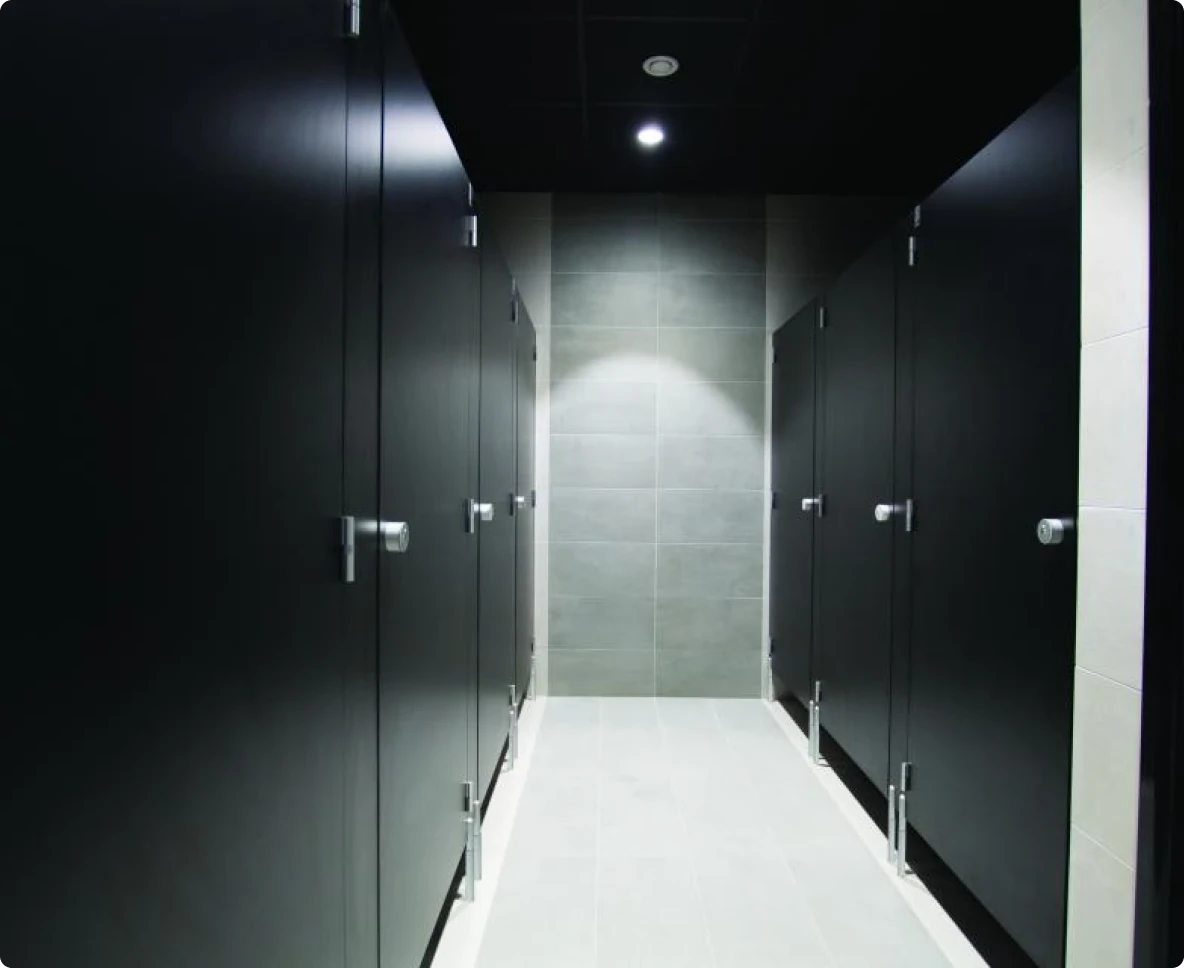
Well-chosen accessories for WC cubicles mean peace of mind for years. Hinges, locks and feet affect the comfort, safety and appearance of the bathroom. The choice does not have to be difficult if you know what to look at. See how to approach the topic step by step. Choose solutions that simply work.
In this article you will learn…
- what accessories are key in WC cubicles;
- what materials hinges, locks and feet should be made of;
- how to match accessories to the facility and conditions of use;
- what standards and installation details matter;
- how to plan servicing and maintenance of accessories;
- when to opt for safety functions and emergency opening.
What accessories for WC cubicles are the basic equipment?
In WC cubicles, what counts is a set that works as a whole. The most important elements are hinges, locks with a bolt and occupancy indicator, feet and handles. Profiles, door stops and sealing strips are often added. Each of these elements plays a different role, but together they are responsible for comfort and durability.
Below you will find the basic accessories that should not be missing in a correctly designed cubicle. It is a simple list that will make it easier for you to quickly check the project. Based on it, you can more easily choose specific solutions and a budget:
- door hinges (often with a self-return/self-closing function);
- a bathroom lock with a bolt and a clear occupancy indicator;
- feet with height adjustment and moisture protection;
- a handle or knob for convenient door opening;
- door stops protecting walls and edges;
- profiles and connectors stabilising the structure.
Before buying, check the compatibility of the accessories with the board and the cubicle system. You choose different elements for HPL and different ones for laminated board. Pay attention to the hole spacing, board thickness and the direction the door opens. This will save you alterations during installation.
What materials should hinges, locks and feet be made of?
The material affects durability, appearance and ease of maintenance. AISI 304 stainless steel works in most facilities. In zones with increased corrosivity (e.g. near swimming pools, in coastal areas) it is worth considering AISI 316. Anodised aluminium elements are light and aesthetic, and properly selected technical plastics help reduce noise and protect surfaces.
When choosing a finish, go for consistency with the rest of the bathroom and resistance to scratches. Satin masks fingerprints and small traces of use well, while polish reflects light more strongly. In places with heavy use, go for solid hinges and locks with a metal structure and occupancy indicators with a resistant housing. If in doubt, consult the choice of material and accessories with the manufacturer or check the ALSANIT catalogue of accessories for WC cubicles.
How to match accessories to the type of facility and conditions of use?
Different facilities have different needs and priorities. In schools, vandal resistance and simple servicing count. In offices, you focus on comfort and aesthetics. In sports facilities, resistance to moisture and easy washing are important, and in hotels – quiet and smooth door movement.
If you are looking for solutions for a specific application, check the manufacturer recommendations and get to know the possibilities of ALSANIT systems for various facilities. This will make it easier to match parameters such as hinge load capacity, bolt type or the adjustment range of the feet. Thanks to this, you will avoid random choices and later corrections.
In heavy public traffic, choose hinges with a higher load capacity, locks with a full metal structure and door stops with a soft contact zone. In changing rooms and near pool zones, stainless steel and elements resistant to cleaning agents and moisture are key. In offices and hotels, quiet hinges with a stop and a clear occupancy indicator work well. In schools, go for elements without sharp edges and with limited access to screws. Always choose feet with an adjustment reserve so that the floor can be levelled without problems.
What standards and installation details are worth taking into account?
Installation affects the user experience just as much as the product itself. Establish a constant gap between the leaf and the partition and keep one opening direction throughout the bathroom. Check the height of the handle and indicator so that operation is natural. Well-positioned door stops help avoid impacts and cracked edges.
Did you know that…? A small correction of the hinge setting can quieten the door and reduce lock wear. Stabilisation with an upper crossbar or angle profile improves the rigidity of the whole module. If you want to know the practical details, check the installation guidelines of the manufacturer ALSANIT and adapt them to your project.
Watch out for the hole spacing when replacing accessories in existing cubicles. Not every lock or hinge fits the same drill holes. It is worth having a cubicle drawing with dimensions and board thicknesses at hand. This will speed up installation and reduce the number of corrections.
How to avoid collisions between doors and partitions?
Start by analysing the range of movement of the leaf and the opening radius. Use door stops at the contact point so that the door does not hit the neighbouring partition. If space is scarce, consider hinges limiting the opening angle. Remember an appropriate clear passage width so that the entrance is comfortable. Well-set geometry eliminates squeaking and accelerated wear.
How to plan maintenance and servicing of accessories?
Regular servicing extends the life of accessories and keeps them running smoothly. Plan a short, periodic inspection – preferably quarterly in high-traffic facilities. You will then check the tightening of screws, deviations and the condition of indicators. Minor adjustments are enough to avoid breakdowns.
Below you will find a simple service plan to implement in the facility maintenance schedule. Just adapt the checklist to your cubicle type and traffic intensity:
- tighten the screws of hinges and locks with the torque recommended by the manufacturer;
- adjust the hinges to maintain an even gap and quiet closing;
- check the operation of the occupancy indicators and the smoothness of the bolt;
- inspect the feet and bases for cracks and stability;
- clean the elements of limescale and detergent residues;
- replace worn door stops and seals with new ones.
For cleaning, use a soft cloth and mild agents, without chlorine and strong solvents. Stainless steel should be periodically protected with a steel care product that refreshes the surface. Write down inspection dates and the scope of work to easily plan the next visits. Such a routine keeps costs in check.
How to take care of user safety and privacy?
Safety starts with the right choice of lock. In public spaces, choose locks with the option of emergency opening from the outside. The occupancy indicator should be legible from a distance and contrasting. The edges of handles and accessories must be smooth and pleasant to the touch.
For people with disabilities, plan an appropriate handle height and light, predictable door movement. In family cubicles, remember stable feet and additional door stops. If you expect high humidity, use materials with increased corrosion resistance.
When to use locks with emergency opening?
Locks with emergency opening are commonly used in high-traffic facilities such as shopping centres, stations and schools. They allow the administrator to open the door in an emergency without damaging the leaf. Choose models with a clear indicator and simple operation from the outside. Compatibility with the hinge system and opening direction is important. It is good if the mechanism has a metal pin and a solid bolt.
What will you gain by choosing proven accessories?
Longer cubicle life and fewer calls to the service team. A consistent look of the whole bathroom and better comfort of use. Shorter installation time thanks to compatible parts and clear instructions. Less risk of damage, because every element works as it should.
Frequently asked questions about accessories for WC cubicles
Below you will find answers to the questions that come up most often when choosing accessories. Short and to the point, without unnecessary technicalities. They will help you close the specification faster.