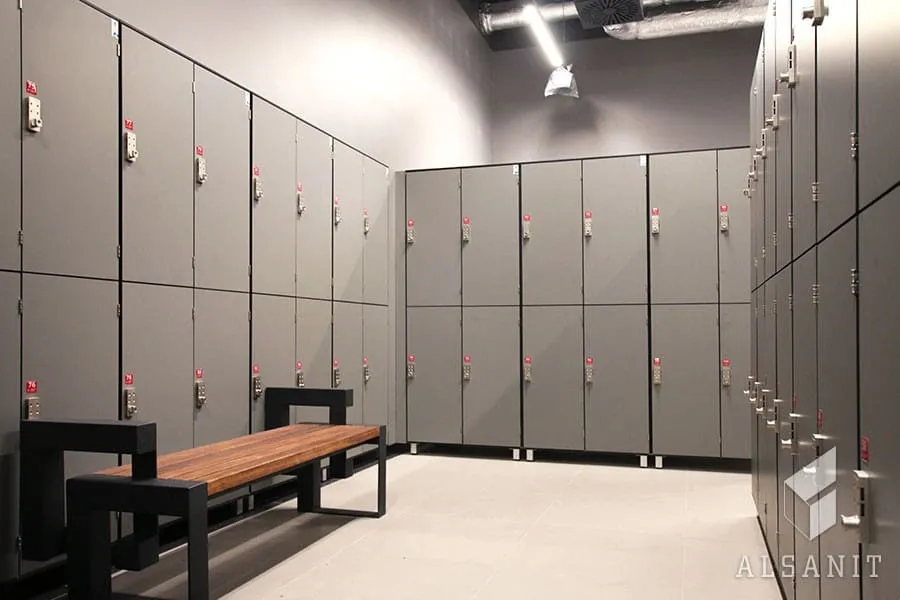
HPL lockers: durability and moisture resistance in public spaces
Have you been looking for a changing room solution that will not give in to moisture, chemicals and intensive use? Lockers made of compact HPL board cope well with daily traffic, wet towels and frequent cleaning. They stand out with a modern look and a wide range of decors. On top of that, they offer…
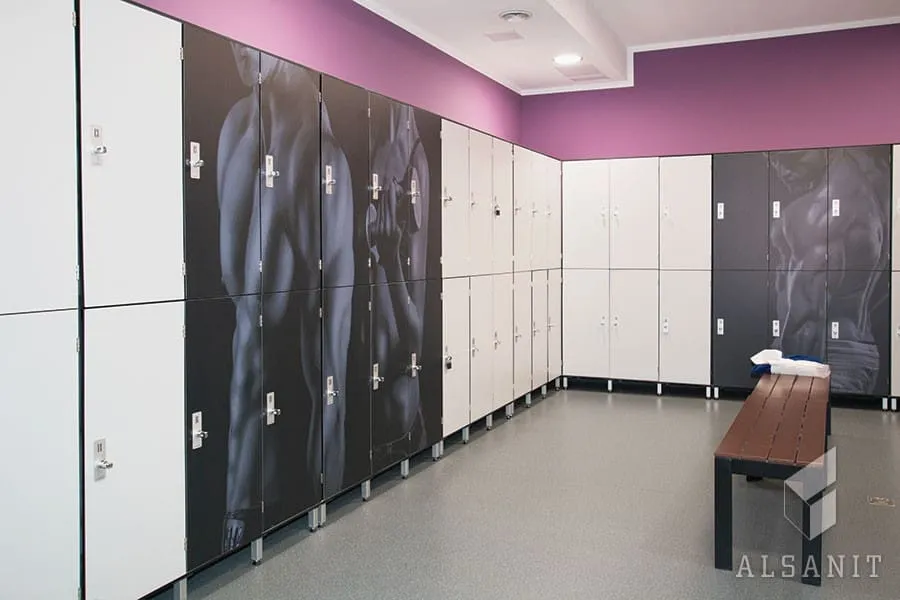
Have you been looking for a changing room solution that will not give in to moisture, chemicals and intensive use? Lockers made of compact HPL board cope well with daily traffic, wet towels and frequent cleaning. They stand out with a modern look and a wide range of decors. On top of that, they offer configuration flexibility from schools to water parks. Below you will find specific tips helpful when planning changing room units.
In this article you will learn…
- what HPL is and how it behaves in a wet environment;
- where HPL lockers work best;
- what dimensions and layout to choose so that the changing room is comfortable;
- what locks and accessories increase safety and comfort;
- how to clean HPL so that it looks like new for a long time;
- how to plan ventilation and the investment budget.
What are HPL lockers made of and what does it mean in practice?
HPL (high pressure laminate) in changing room applications is usually a compact board pressed at high temperature and under great pressure. The material is uniform in cross-section, rigid and impact-resistant. It does not absorb moisture, so it performs stably in wet zones. The smooth or finely structured surface makes it easier to maintain hygiene.
See how an HPL board is made and what it brings to everyday use:
- layers of kraft paper saturated with phenolic resins form a hard, compact core;
- the decor coated with melamine resin is responsible for colour and texture;
- pressing at high temperature and pressure fuses the layers into one whole;
- the surface is closed, non-porous and easy to clean and disinfect;
- the edges do not require edging after machining, are impact-resistant and do not swell;
- dimensional stability maintains the geometry of the doors in humid conditions.
In practice, you get lockers resistant to water, commonly used detergents and intensive cleaning. The doors do not sag from moisture, and the bodies do not warp. The decor keeps its colour for years, because the colours are in the decor layer, not in a surface paint.
Where will HPL lockers work best?
Best in wet and humid zones: at swimming pools, in saunas, spas and in the changing rooms of gyms and fitness clubs. They also do very well in schools and sports facilities, where resistance and hygiene matter. They work in the back rooms of sports halls, in areas with showers and in staff changing rooms. They can also be used in the back rooms of medical facilities, where easy cleaning is important.
How to choose dimensions and layout so that the changing room runs smoothly?
Start with the flow of people and the circulation plan. Measure the widths of passages, mark out the changing zone and places to put things down. Choose the door module according to needs: single, double, „Z”. Determine the height and depth, taking into account sports bags, outerwear and footwear.
As a practical reference point, the following are used:
- body height 1800 mm
- depth most often 490 mm;
- module width 300 or 400 mm.
Rows should be planned so that open doors do not collide with benches. In club changing rooms, columns with an integrated bench work well, while in schools it is worth using „Z”-type modules, which allow more efficient use of the room height.
. In premium zones, consider larger modules or wardrobe lockers with shelves and a rail. Take care of space for shoes and wet clothes and clear numbering to speed up user rotation.
What finishes and certificates will increase user safety?
- Choose HPL boards with declared resistance to scratches, moisture and cleaning agents.
- In wet zones, go for stainless steel fittings and corrosion-resistant hinges.
- Pay attention to documents confirming functional and hygienic safety (classifications, declarations of performance).
- Choose decors and textures that make it easier to keep clean (smooth or finely structured surfaces).
What locks and accessories are worth choosing for your zone?
Match the lock to the traffic and operation profile:
- facilities with high user rotation: padlock fittings or mechanical/electronic combination locks;
- subscription and premium zones: electronic RFID locks.
Useful accessories:
- feet or plinths;
- sloping tops designed to hide e.g. ventilation elements or the wiring of electric locks;
- perforations in doors and bodies improving air exchange;
- free-standing or integrated benches, with a shoe shelf in wet zones.
How to maintain cleanliness and hygiene without excessive effort?
Compact HPL responds well to simple, regular cleaning with neutral agents. Avoid abrasive powders and aggressive sponges. Remove sweat and cosmetic stains as they appear. Protect metal fittings against deposits from water.
Action plan for cleaning teams:
- wipe surfaces with a soft microfibre cloth and a mild detergent;
- rinse with clean water and dry so as not to leave streaks;
- remove limescale on fittings with a stainless steel product;
- check and clean the ventilation openings;
- use floor mats to reduce sand being carried in;
- keep a short log of inspections and interventions.
A regular routine keeps the boards looking fresh and the fittings working. For more difficult dirt, follow the recommendations of manufacturers of cleaning agents suitable for HPL and stainless steel.
How to plan ventilation and moisture drainage in a changing room?
- Plan perforations or a ventilation gap in the doors and openings in the bodies.
- Instead of pushing plinths directly against the floor, use feet or plinths mounted with an appropriate gap.
- Ensure effective mechanical ventilation of the entire zone, adapted to the moisture load.
- In wet zones, anticipate wet items being put down and water dripping: make floors with a slope towards the drain and position the benches so that water does not collect under the seats.
Are HPL lockers suitable for outdoor use?
In principle, HPL lockers are designed for interiors. If you plan outdoor use, HPL boards in an exterior version (with increased UV resistance), fully stainless steel fittings, a roof and free air circulation are necessary. Always consult such a solution with the manufacturer regarding operating and service conditions.
How to optimise the budget when choosing lockers?
- Use repeatable module dimensions – this lowers production and installation costs.
- Consider standard colours available off the shelf.
- Match the equipment to the real needs of the zone (without „excessive” options).
- Pay attention to the durability of fittings, availability of parts and ease of servicing.
Look at the total cost of ownership (TCO), not just the purchase price. Solid fittings and simple servicing reduce downtime and operating costs.
When is metal the better choice, and when HPL?
Metal works well in dry back rooms and where resistance to vandalism is the priority. HPL wins in places with moisture, frequent washing and hygiene requirements. In hybrid facilities, both technologies can be combined, matching them to the zones. Keep consistent colours and numbering to make orientation easier for users.
What will you focus on when planning your next changing room modernisation?
Write down the conclusions from observing user traffic and cleaning work. Match dimensions and accessories to real daily scenarios, not just the floor plan. Identify materials and fittings that will withstand the working conditions of the zone. Establish a simple service and cleaning procedure before installation.
Frequently asked questions about HPL lockers
Below you will find quick answers to recurring questions. They will help you make a decision and prepare the project assumptions faster.