Ergonomics and design: how to plan a changing room with lockers?
Creating a functional changing room with lockers can give you comfort, order and a better user experience every day. In a well-designed interior it is easier to maintain smooth movement and comfort, and a modern design can add lightness to the space. In this article I show simple rules you can implement right away to…
Creating a functional changing room with lockers can give you comfort, order and a better user experience every day. In a well-designed interior it is easier to maintain smooth movement and comfort, and a modern design can add lightness to the space. In this article I show simple rules you can implement right away to improve ergonomics and aesthetics. You will find tips on materials, layout, safety and maintenance. Read on to plan a changing room with lockers so that it is durable, comfortable and attractive.
In this article you will learn:
- how materials affect the ergonomics and design of a changing room;
- how to arrange lockers to achieve a convenient layout;
- how to look after the hygiene and durability of lockers;
- how to match accessories and extras to the changing room;
- how to make use of the solutions used in ALSANIT systems.
How do materials affect the ergonomics and design of a changing room with lockers?
The choice of materials determines the appearance and durability of the entire space. Compact boards and moisture-resistant materials work best in changing rooms. Their resistance supports functionality and reduces operating costs. They also influence the visual perception of the whole zone.
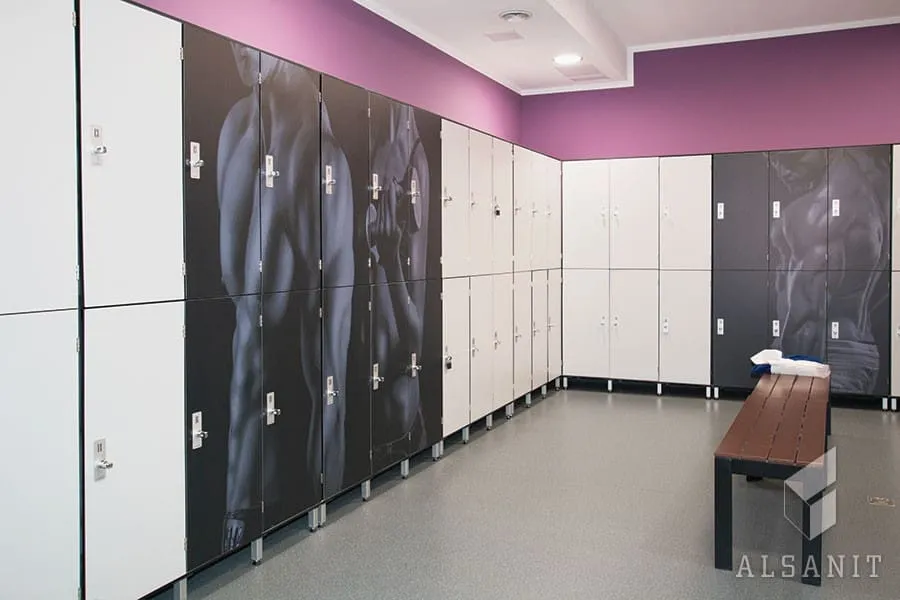
Secondly, consistency of colours and textures matters. Modern systems allow you to combine minimalism with intense colours. Lockers made of HPL boards or aluminium look aesthetic and remain stable. ALSANIT often uses such solutions in its collections.
How to arrange lockers so that the ergonomics of the changing room is practical?
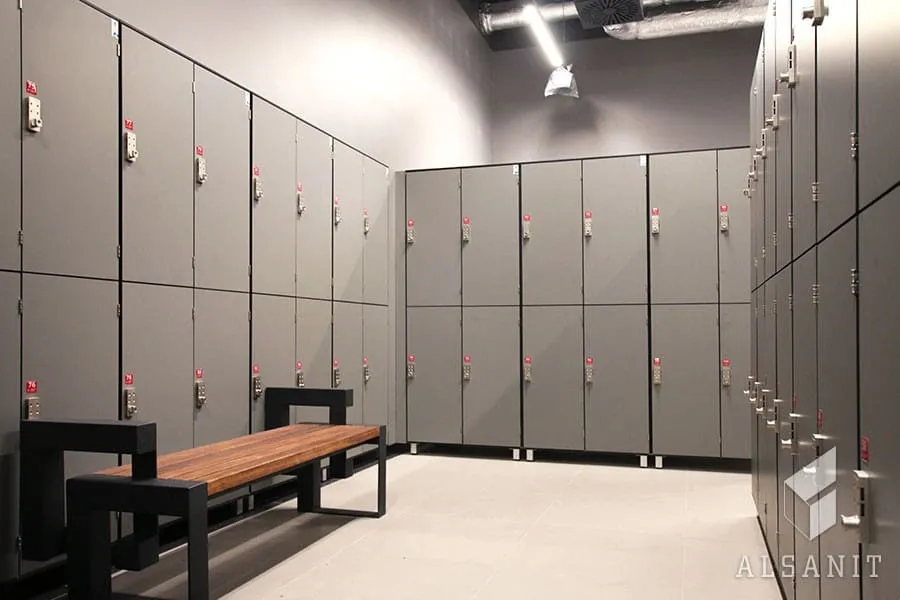
A good layout makes it easier to move around and use the space. It is worth keeping appropriate distances between rows of lockers to avoid crowding. Pay attention to the way the doors open and to heights that are comfortable for users.
Before making a decision, pay attention to the key layout rules:
- ensure convenient access to each locker;
- remember corridors of a safe width;
- take care of heights matched to the height of users;
- choose a layout that does not block movement.
A changing room designed this way gives a sense of order and flow. Ergonomics combines here with aesthetics, which improves the user experience. ALSANIT often emphasises the importance of a well-matched layout in its projects. Thanks to this, the space looks natural and modern.
Why does the aesthetics of a changing room with lockers affect the comfort of use?
The appearance of the interior matters because you perceive it as a whole. Consistent colours, smooth surfaces and an interesting locker form create a friendly atmosphere. Users find their place faster and feel more at ease.
Two sentences are a good introduction to exceptional solutions. Aesthetics makes it easier to find your way around the space and improves the quality of use.
Three sentences emphasise the role of details and extras. Lighting, handles and numbering can add character and organise the layout. With ALSANIT you can easily match the elements to the style of the interior.
How to look after the hygiene of a changing room with lockers so that it stays durable?
The resistance of materials is the basis for everyday use of a changing room. HPL compact boards are easy to clean and offer a high level of hygiene. Water and cleaning agents do not damage their surface. Thanks to this, you keep things tidy without much effort.
The next three sentences explain the importance of regularity in maintenance. Keeping things clean affects comfort and safety. ALSANIT designs its systems to make maintaining hygiene easier.
How do accessories help create an ergonomic changing room with lockers?
Accessories add functionality and allow you to adapt the interior to the needs of users. Hooks, benches and ventilation elements increase comfort. They also help keep the space organised.
Two sentences introduce the next list well: remember a few elements that raise the quality of use:
- wybierz wygodne uchwyty;
- choose durable hinges;
- opt for ventilation;
- dodaj wygodne siedziska.
Three sentences summarise the role of accessories. Extras support aesthetics and practicality. In ALSANIT systems you can easily match the elements to the style and purpose of the changing room. Well-chosen accessories improve user comfort.
How does lighting affect the ergonomics and design of a changing room with lockers?
Lighting shapes the interior and emphasises its function. In a well-lit changing room it is easier to use the lockers, find your things and keep order. The choice of light colour affects the perception of colours and materials. You can use spot lighting to mark out zones.
Four sentences in the next paragraph clarify the rules of lighting planning. Spot fittings add elegance and help with orientation. LED fittings work best in changing rooms with lockers. ALSANIT uses such solutions in its facilities.
Three further sentences emphasise practice. Lighting should be even to avoid shadows. Proper placement improves ergonomics and comfort.
What mistakes appear when designing a changing room with lockers?
The most common problem is incorrect planning of the space. Too small distances between lockers make movement difficult. Lack of adaptation to the number of users limits functionality. It is worth paying attention to the natural way the interior is used.
One sentence introduces the list of the most common mistakes: here are the most important pitfalls that appear in projects:
- brak wentylacji;
- too little storage space;
- nieergonomiczne uchwyty;
- lighting that is too dark.
Three sentences summarise this section. Avoiding mistakes allows you to achieve a harmonious effect. A changing room with lockers becomes comfortable and aesthetic. It is worth taking inspiration from the practices used by ALSANIT.
How do colours affect the ergonomics and design of a changing room with lockers?
Colours influence the perception of the interior and its proportions. Light colours add lightness and visually enlarge the space. Intense accents emphasise modern design. In changing rooms it is worth combining colours in a consistent way.
The next paragraph develops this idea, describing colour selection. Contrasts can help with orientation, especially in large facilities. Surfaces in a consistent shade make it easier to keep order. ALSANIT offers a wide colour palette.
Three sentences close the topic. The right colours affect the comfort of use. Aesthetics and ergonomics support each other. It is an important element of design.
How to sum up the ergonomics and design of a changing room with lockers in practice?
Four sentences summarise the whole text. Designing a changing room with lockers is a combination of functionality and aesthetics. Materials, layout and accessories create a harmonious whole. Good planning translates into user comfort.
Frequently asked questions about the ergonomics and design of changing rooms with lockers
The introduction to the FAQ section explains its purpose. The questions gathered below make it easier to organise the knowledge from the text. The answers will help you plan the changing room even better.