Staff changing rooms – what requirements and health and safety regulations must they meet?
Every employer is obliged to provide employees with a hygienic place to store their clothing. In some workplaces, however, a changing room must be set aside for this purpose. Moreover, such a staff changing room must meet specific requirements – set out in legal acts – regarding its size, equipment and conditions. How to arrange…
Staff changing rooms: regulations and legal basis
Polish law imposes detailed requirements that changing rooms for employees must meet. The regulations govern when such a room must be provided, its equipment and the conditions in it; the guidelines depend on the number of employees and the type of work performed.
The legislator has gathered the rules on staff changing rooms in several acts:
- Ustawie z dnia 26 czerwca 1974 r. Kodeks pracy (Dz.U.2025.277);
- the Regulation of the Minister of Labour and Social Policy of 26 September 1997 on general occupational health and safety regulations (Dz.U.2003.169.1650), especially Annex 3 („Requirements for hygienic and sanitary rooms and facilities”);
- the Regulation of the Minister of Infrastructure of 12 April 2002 on the technical conditions to be met by buildings and their location (Dz.U.2022.1225).
Under the regulations, staff changing rooms are hygienic and sanitary rooms (alongside washrooms, toilets, rooms for washing, disinfecting, drying and dedusting work clothes and footwear as well as personal protective equipment, and rest rooms). It is therefore worth paying attention also to the provisions on hygienic and sanitary rooms, which apply to changing rooms as well, even though they do not mention them directly.
Health and safety regulations: staff changing room – general provisions
The employer is obliged to provide employees with hygienic and sanitary rooms and facilities – their type, number and size are adjusted to the number of employees, the type and conditions of work and the technologies used.
Changing room for employees: the obligation to provide one
- An employer with up to 20 employees may arrange a space for storing personal, work and protective clothing (e.g. staff lockers) in one shared staff room, which also contains e.g. washbasins and a place to eat meals. On one condition – there are no factors harmful to health or special sanitary requirements in the workplace, and the employees perform clean work.
- Office workers may store clothing in work rooms, but they should do so in specially designated places (e.g. Clothing lockers, hooks).
- In other cases, clothing should be stored in changing rooms. Changing rooms must be arranged separately for women and men, unless up to 10 employees work on one shift and can use these rooms separately.
Depending on the conditions and types of work, the employer must also provide a specific type of changing room (for storing the personal clothing of employees, for storing work clothing, a basic changing room or a pass-through changing room).
General conditions and equipment of a staff changing room
- The changing room must be located in the building where the employees work, or in a building connected to it by an enclosed passage, in a separate or partitioned room.
- Staff changing rooms should be heated, lit and ventilated in accordance with the applicable technical and construction regulations and the relevant Polish standards. The minimum temperature in a staff changing room is 24°C (a room intended for undressing, in accordance with the regulation on technical conditions). The changing room must be provided with at least four air changes per hour (over 25 employees: mechanical ventilation).
- The changing room should be at least 2.5 m high (down to 2.2 m clear height if it is located in a basement, cellar or attic).
- In the changing room, seating must be provided for at least 50% of the employees on the largest shift. If the work causes significant soiling of clothing or the work clothing must meet special conditions, the changing room complex should also include facilities for disinfecting, dedusting and drying clothing and cleaning footwear (as needed).
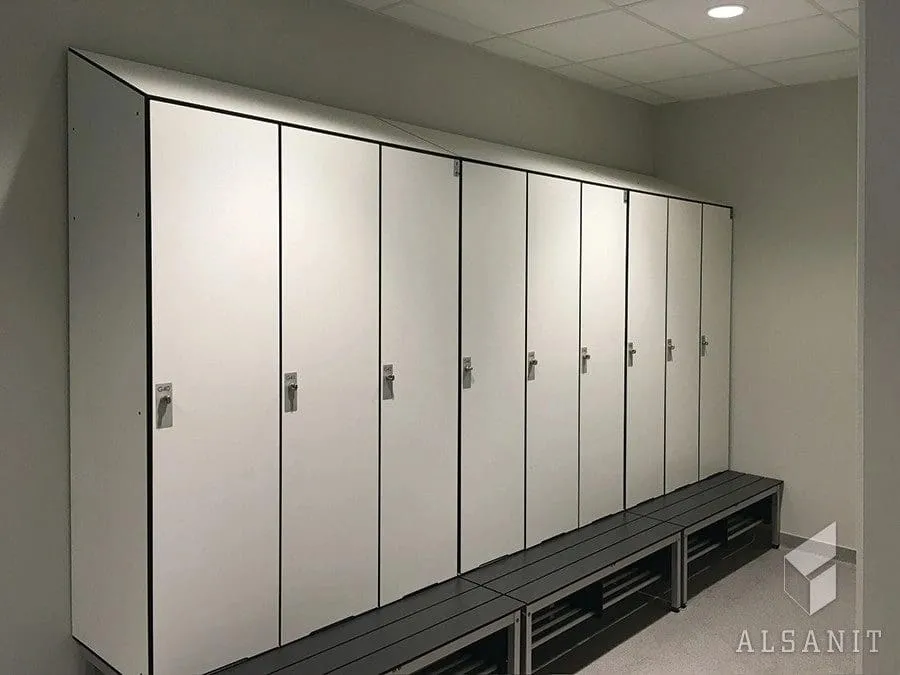
- The minimum distance between lockers in the changing room (passage width) is 1.5 m; the passage between a row of lockers and the wall should be at least 1.1 m. Social lockers installed in a staff changing room must meet the requirements of the relevant Polish standards.
- The changing room complex should include washrooms that are easily accessible to employees and ensure unobstructed movement of people who have already washed and changed into their own clothes as well as the other employees.
- CCTV should not be installed in the changing room unless it is necessary and does not violate the personal rights of employees.
Staff changing room: detailed requirements
The remaining guidelines for staff changing rooms depend on what the employees of the company do, under what conditions they work and what requirements must be met in the workplace.
Changing rooms for personal clothing
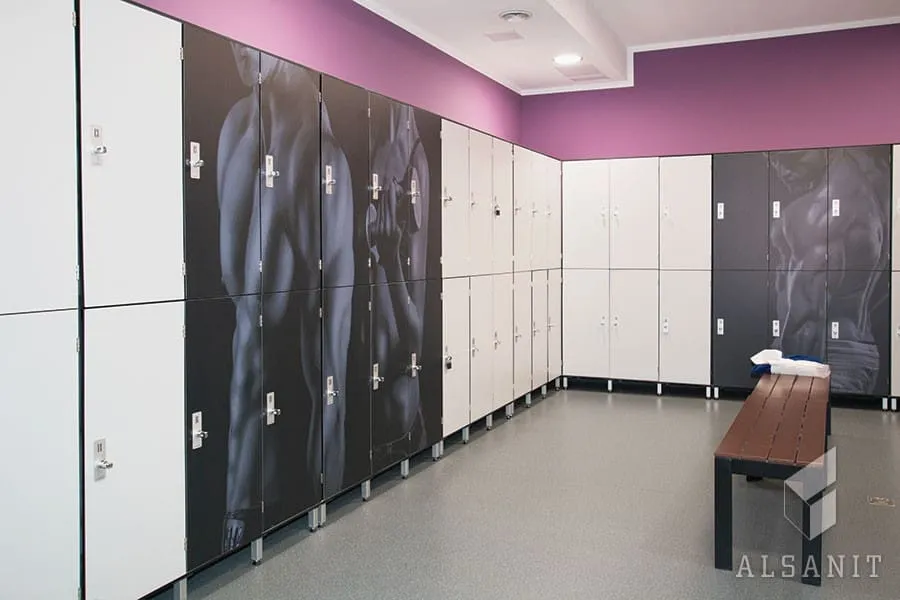
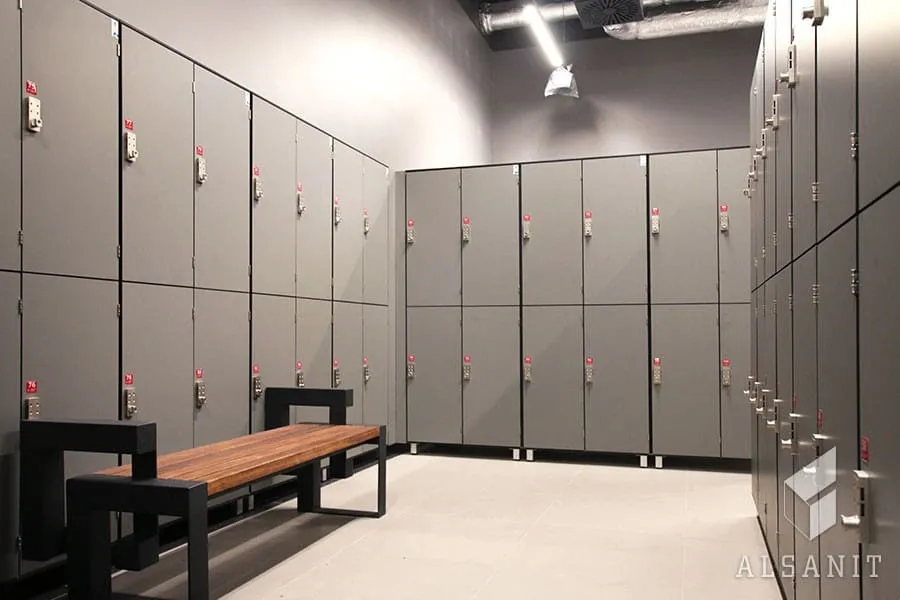
A changing room for personal clothing should be equipped with individual lockers for each employee. The employer must provide at least 0.3 m2 of free floor space per person. If working conditions allow, a hanger-type cloakroom may be arranged (but it must be operated by staff designated for this purpose). If employees change into work clothes, separate rooms for women and men (or cubicles) must be provided, as well as seating for at least 30% of the employees on the largest shift.
Changing rooms for work and protective clothing
A changing room for work and protective clothing must be arranged independently of the changing room for personal clothing if the work causes significant soiling of clothing or the clothing must meet special hygienic and sanitary requirements. Here, too, the requirements of at least 0.3 m2 of free floor space and an individual locker for each employee apply. In addition, the changing room for work clothing must be directly connected to the washroom, showers and the changing room for personal clothing.
Basic changing room
It can be arranged instead of two separate changing rooms if the soiling of protective clothing does not contaminate the personal clothing of employees. The basic changing room should be connected to a washroom. Each employee must be provided with more space (0.5 m2) and two single lockers or one double locker (allowing personal clothing and work and protective clothing to be stored separately).
Walk-through changing room
A pass-through changing room is mandatory when the work involves the use or release of substances that are, among others, toxic, infectious, irritating or have an unpleasant odour, or involves heavy soiling (e.g. dust). It must be divided into two parts: for personal clothing and for work and protective clothing, which must meet the requirements set for these types of changing rooms (as above). Movement between the parts of the pass-through changing room should take place through a sanitary room with showers.
When arranging a changing room for employees, it is worth using the help of ALSANIT specialists: a European leader in workplace equipment. We will provide good advice and deliver complete equipment for changing rooms and sanitary facilities – we will help you complete your investment quickly and conveniently. Get in touch with us.
Contact us and together we will design the elements of sanitary and hygienic infrastructure for your school or kindergarten.
FAQ:
- Is the employer obliged to provide a staff changing room?
Yes, with two exceptions. If the company employs up to 20 people working in clean and safe conditions, a place for storing clothing can be set aside in one common staff room. Office workers may also store clothing in the work room, in a specially designated place.
- Must the employer provide separate changing rooms for women and men?
Yes, unless the workplace employs up to 10 workers on one shift (or 5 in the case of a hanger-type cloakroom). In that case, it must be possible to use the changing room separately, or separate changing cubicles must be provided.
- Ile m2 should there be per employee in the changing room?
Each employee must be provided with at least 0.3 m2 (changing room for personal clothing and changing room for work clothing) or 0.5 m2 (basic changing room: combined) of free floor space.