Sports changing room lockers – types and parameters
In sports facilities, changing rooms are an important space where you can prepare before a game. Sports changing rooms and lockers must be adapted to the needs of the club and the players. What should be taken into account when designing football or hockey lockers for sports changing rooms, and what parameters must they meet?
Sports changing rooms – what should they be like?
Sports changing rooms are facilities subject to specific hygiene and sanitary requirements. Complying with them is particularly important for safe use. That is why sports changing rooms should be properly designed to accommodate the designated number of people. Determining how many users can use the changing room at the same time also affects the planning of further infrastructure (the number of shower cubicles or toilets).
The quality of the materials used is important – they must be durable, resistant to mechanical damage and to the adverse effects of water. Floors absolutely must be non-slip, while the flooring and locker fronts should be made of materials that are easy to clean. In places like these, the most important are lockers for a volleyball club changing room, for an ice rink or for football, which allow players to leave their belongings safely and arrange them comfortably in the locker.
Sports locker specifications
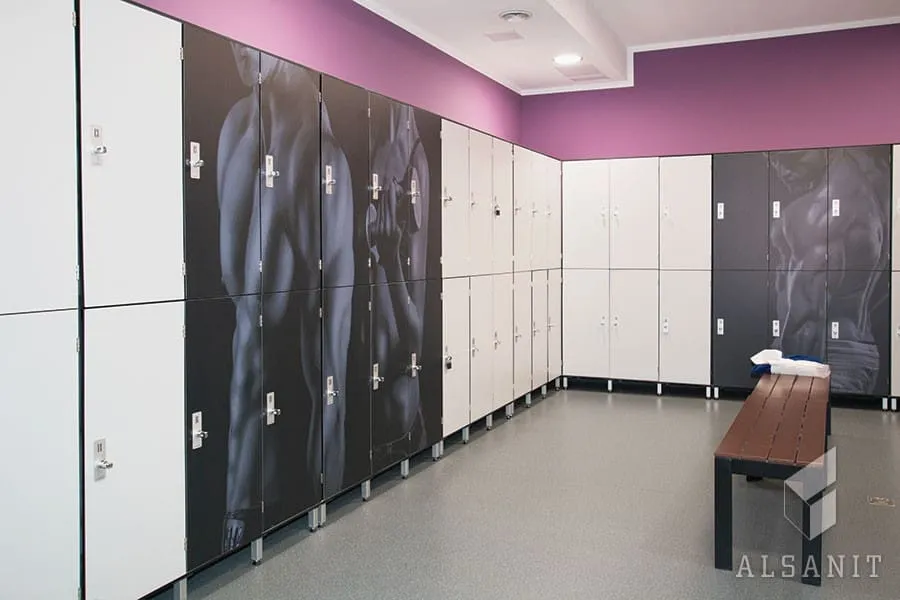
Lockers dedicated to sports facilities: football, hockey, volleyball, ice rinks and others. In these places, lockers are designed taking into account the available space and the needs of the club or stadium. It is an element of the changing room that is meant to be functional above all, but it should also meet aesthetic requirements. For this reason, some sports lockers have fronts in club colours, and some feature a graphic design with a logo. Such additional aesthetic elements increase prestige and emphasise visual identity.
In sports facilities, the changing rooms and hockey lockers, football or ski lockers located in them must meet the expectations of the players. At Alsanit, we adapt this important element of the changing room to the expectations of the client – in terms of size, workmanship and final design.
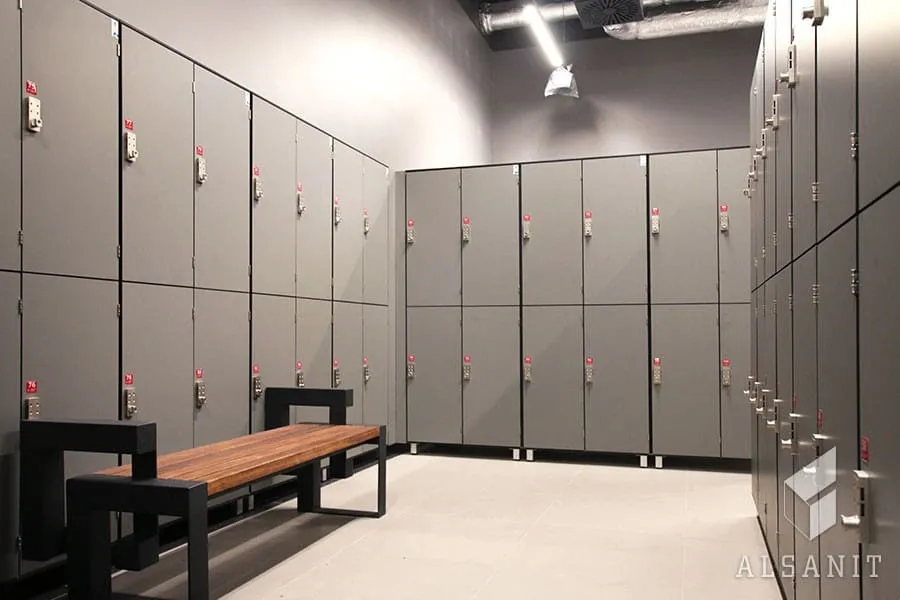
Benches are also an important element, usually placed next to volleyball or hockey club changing room lockers, but for extra comfort, pouffes placed in the middle of the room are also used.
What are lockers in sports changing rooms made of?
Lockers for sports clubs and stadiums are usually made of three materials: HPL board, laminated chipboard and tempered glass. They are characterised by high durability and resistance to mechanical damage; moreover, they do not absorb moisture and are easy to clean.
- HPL – High Pressure Laminate, i.e. high-pressure laminate. HPL boards are made of cellulose fibres soaked in resin, which are then pressed under high pressure. It is a damage-resistant material, which is why it is so often used in furniture production – especially for sports facilities. The protective coating on the HPL board is also highly resistant to adverse weather conditions, thanks to which football lockers in sports clubs made of this material do not lose their colour. The top layer of the HPL board can come in various colours as well as 3D prints. HPL lockers are highly waterproof, which is important in rooms such as changing rooms.
- LPW – i.e. laminated chipboard (LPW). It is produced from wood chips pressed at high temperature and under pressure using binding agents. The surface of the LPW board is covered with melamine, available in many colours. The greatest advantages of this board are durability, resistance to mechanical damage and an attractive appearance that does not lose its colour even after many years of use. In addition, LPW board is resistant to the adverse effects of moisture.
Types of sports lockers
In sports changing rooms, facilities and clubs, several types of lockers offered by Alsanit work best. We prepare an individual design for each room, taking into account its size and the needs of the facility, club or stadium changing room.
- Taurus is a system of lockers for ice-rink or hockey changing rooms, which is made of HPL board resistant to scratches and the harmful effects of moisture. Taurus lockers are made to measure and adapted to their destination. This type of locker can be foiled, engraved or numbered.
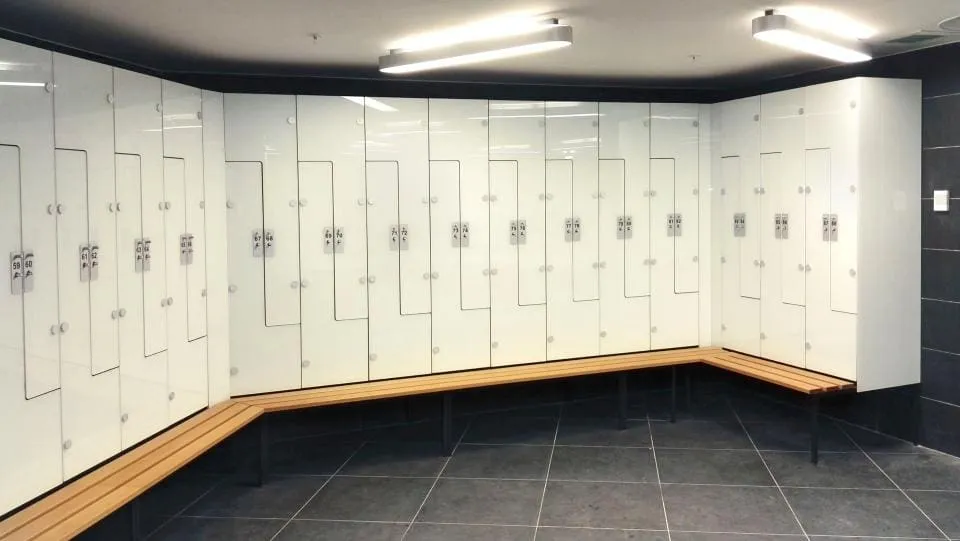
- Combo – these are football lockers, hockey and ski lockers with a modular body structure, which allows the cabinets to be modified. If necessary, individual elements can be easily replaced. Such sports changing room lockers are also safe – they have no sharp edges and the hinges are invisible. The doors are made of HPL boards, which guarantees the lockers durability and water resistance; LPW which enhances its aesthetic qualities, or tempered glass, which is lacquered in a colour of your choice from the available palette. This effect adds exclusivity to the changing room equipment.
- Luxa – sports changing room lockers made of LPW boards. In these lockers, the hinges are invisible from the outside and have a soft-close function, which means that the locker doors close gently and smoothly.
For every type of football lockers, hockey lockers or lockers for a volleyball club, suitable benches or pouffes are matched, made of HPL boards on an aluminium frame, with a metal body and a wooden seat. The Alsanit offer also includes Blox pouffes, with a frame made of LPW boards and upholstered seats.
Sports changing room lockers should above all be functional and adapted to the needs of the facility and the athletes. At Alsanit, we offer an individual design tailored to the place and the expectations of the client.